
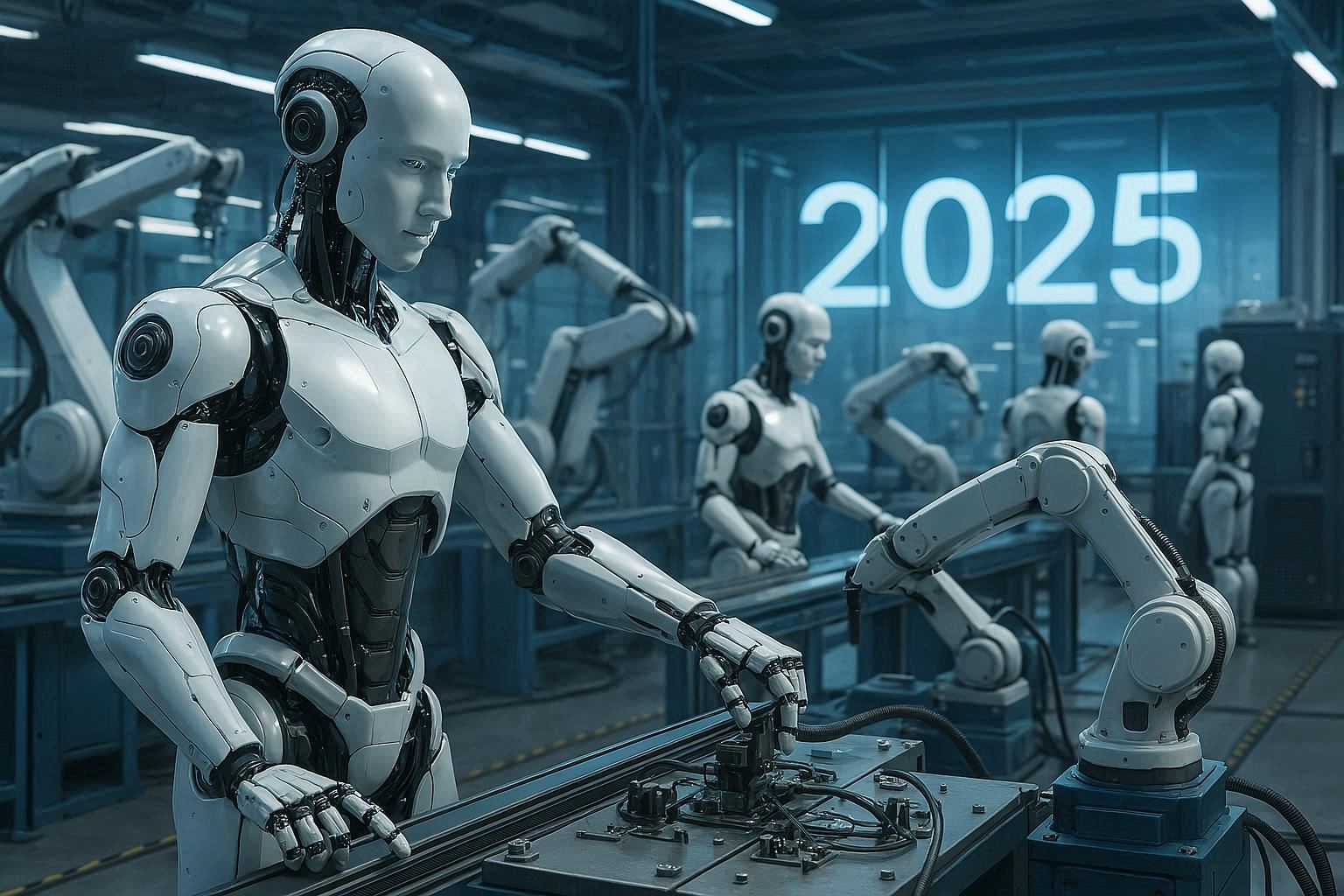
In 2025, robotics and automation are no longer futuristic concepts—they are essential drivers of modern economies. From manufacturing and healthcare to logistics and agriculture, machines are transforming how we work, produce, and live. As artificial intelligence (AI) and advanced sensors improve, robots are becoming smarter, more efficient, and more collaborative, marking the dawn of a new industrial revolution.
This article explores the major trends shaping robotics and automation in 2025, their economic and social impacts, and how they are redefining the future of global industries.
1. The Evolution of Robotics
Robotics has evolved from simple, repetitive machines to intelligent systems capable of learning and adapting. Early robots were confined to factory assembly lines, performing predefined tasks. Today, with the integration of AI, machine vision, and natural language processing, robots can make real-time decisions, recognize objects, and even interact with humans safely and intuitively.
2. Key Sectors Driving Automation
Automation is spreading across all major industries. In manufacturing, robots handle precision assembly and quality control. In logistics, automated guided vehicles (AGVs) and drones optimize supply chains. The healthcare sector uses robotic surgery systems and automated diagnostic tools, while agriculture employs drones and autonomous tractors to improve yields. Even in retail, automation is transforming warehouses and checkout systems.
3. Collaborative Robots (Cobots)
One of the most important trends in 2025 is the rise of collaborative robots, or “cobots.” Unlike traditional industrial robots that work in isolation, cobots are designed to operate safely alongside humans. They assist workers with tasks such as lifting, assembling, or inspecting, increasing efficiency while reducing workplace injuries. Their flexibility and lower cost make them especially valuable for small and medium-sized enterprises (SMEs).
4. AI and Machine Learning Integration
Artificial intelligence is the brain behind modern automation. Machine learning algorithms allow robots to analyze data, detect patterns, and improve their performance over time. This enables predictive maintenance in factories, self-learning robots in warehouses, and adaptive systems that can switch between tasks without reprogramming. As AI models become more advanced, automation will continue to accelerate across industries.
5. Robotics in the Workforce
Automation has sparked debates about the future of employment. While robots replace certain manual jobs, they also create new opportunities in engineering, maintenance, and data analysis. The workforce of 2025 is increasingly hybrid—humans and robots working together. To thrive in this environment, workers must develop digital and technical skills that complement automation rather than compete with it.
6. Economic Impact of Automation
Economists estimate that automation could add trillions of dollars to global GDP by 2030. Productivity increases are driving economic growth and lowering production costs. However, regions that fail to adopt automation risk falling behind in competitiveness. Governments are therefore investing heavily in research, education, and infrastructure to support this technological shift.
7. Ethical and Social Considerations
As robots become more autonomous, ethical concerns are growing. Questions about accountability, data privacy, and the replacement of human labor are central to the discussion. It is essential to establish clear regulations that ensure technology benefits society as a whole. Responsible innovation, transparency, and retraining programs will be key to achieving a balanced transition.
8. Emerging Technologies Shaping the Future
In addition to AI, several emerging technologies are propelling robotics forward. Edge computing enables real-time decision-making close to the source of data. 5G connectivity enhances communication between machines, while advanced materials make robots lighter and more energy-efficient. Meanwhile, bio-inspired robotics—machines modeled after animals or humans—are opening new frontiers in exploration, rescue operations, and healthcare assistance.
9. The Road to Fully Autonomous Systems
The ultimate goal of automation is full autonomy—machines capable of performing complex tasks without human input. Self-driving vehicles, automated shipping ports, and AI-powered factories are early examples. As algorithms improve, we will see a rise in autonomous ecosystems where machines manage production, logistics, and maintenance independently, with minimal human supervision.
Conclusion
The future of robotics and automation in 2025 is marked by innovation, integration, and collaboration. Robots are no longer just tools; they are partners enhancing productivity, safety, and creativity across every industry. While challenges such as job displacement and ethical concerns persist, the opportunities are vast. By embracing education, responsible regulation, and human-machine collaboration, societies can harness automation to build a smarter, more efficient, and more sustainable future.