
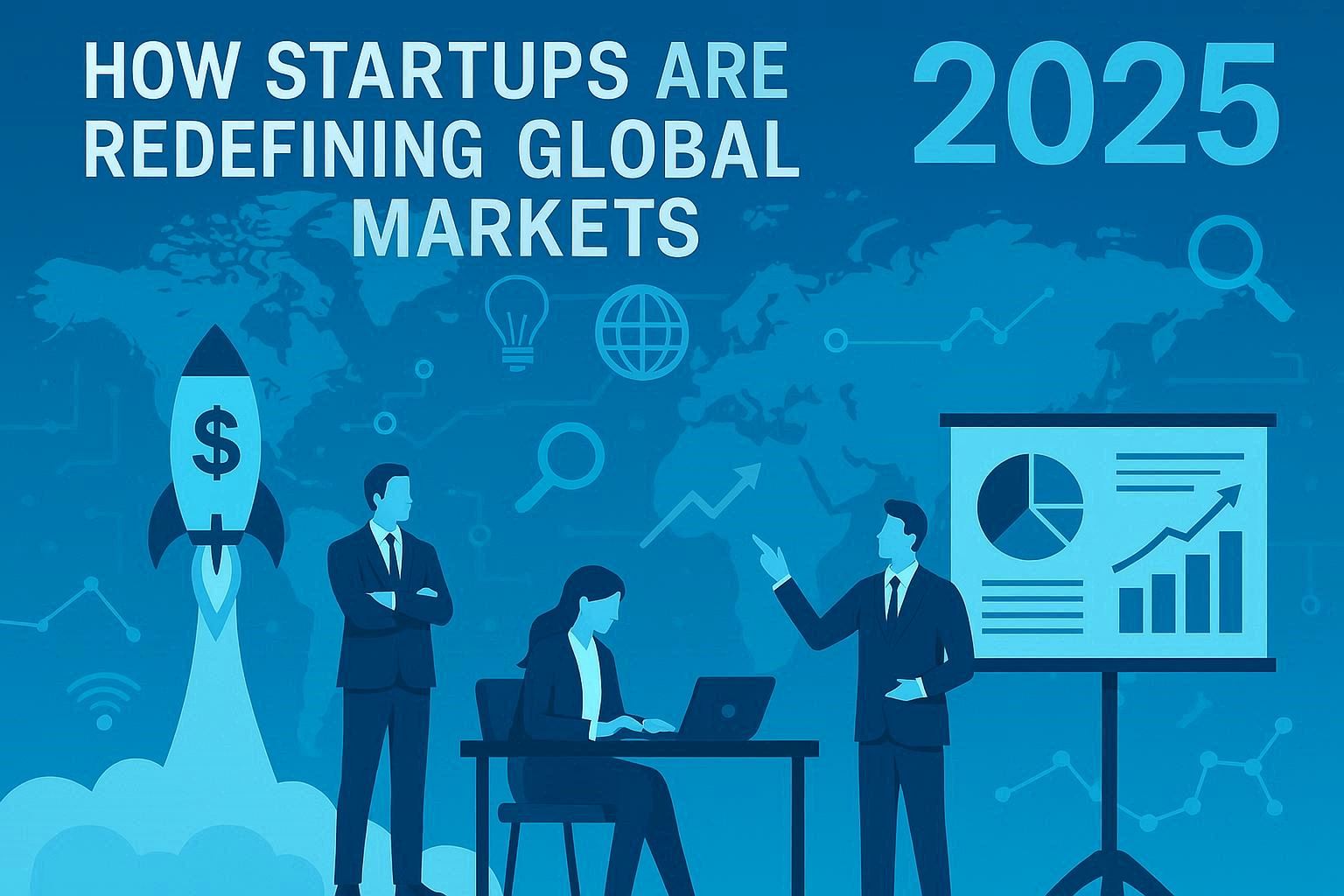
In 2025, startups are not just participants in the global economy—they are its most powerful disruptors. Across industries, from technology and finance to healthcare and renewable energy, startups are introducing bold ideas that challenge traditional business models and inspire new ways of thinking. Their agility, innovation, and digital-first mindset are reshaping how markets operate, how consumers engage, and how industries grow.
This article explores how startups are driving transformation in global markets, the trends fueling their success, and what established companies can learn from their innovative approaches.
1. The Startup Revolution in a Digital Economy
Digitalization has lowered barriers to entry for entrepreneurs worldwide. With access to cloud computing, digital marketing, and global e-commerce platforms, startups can reach international audiences faster than ever before. In 2025, even small teams can compete with multinational corporations by leveraging data analytics, automation, and social media.
Global investment in startups continues to rise, especially in sectors like artificial intelligence, fintech, green technology, and health tech. Venture capital firms and government innovation programs are fueling this rapid expansion, recognizing startups as key drivers of economic growth.
2. Innovation at the Core
Startups thrive on innovation. Their strength lies in identifying gaps in traditional industries and creating products or services that solve real-world problems. In 2025, many startups are using AI to enhance personalization, blockchain to improve transparency, and automation to streamline operations.
Unlike large corporations, startups are unafraid to take risks and pivot quickly. This flexibility allows them to adapt to changing consumer behavior, market disruptions, and technological shifts with remarkable speed.
3. Global Reach Through Technology
Technology has eliminated the geographical boundaries that once limited business growth. Startups today can serve customers from Asia to Europe with just a few clicks. Digital marketplaces, remote collaboration tools, and cloud-based systems enable global operations without the need for physical infrastructure.
For example, SaaS startups are scaling internationally by offering subscription-based models accessible anywhere. E-commerce startups are partnering with global logistics platforms to deliver goods across continents. This global connectivity is redefining the scale and speed at which businesses can grow.
4. Funding and the Rise of Alternative Finance
Traditional venture capital remains important, but new funding models are emerging. Crowdfunding, decentralized finance (DeFi), and token-based fundraising have democratized access to capital. Entrepreneurs can now attract investors directly from online communities, accelerating innovation in previously underserved regions.
Moreover, corporate venture arms and impact investors are increasingly seeking startups with sustainable and socially responsible missions, integrating ethics with profitability.
5. Sustainability as a Business Imperative
In 2025, sustainability is no longer an optional branding strategy—it’s a business necessity. Startups are leading the way by embedding sustainability into their operations from day one. From biodegradable packaging to renewable energy solutions, they are proving that eco-friendly practices can also be profitable.
Consumers now prefer brands that prioritize environmental and social responsibility, and startups that align with these values gain stronger market loyalty and long-term resilience.
6. The Role of Artificial Intelligence and Automation
AI and automation are transforming how startups operate. Smart algorithms manage marketing campaigns, optimize logistics, and even predict market trends. Startups using machine learning tools are achieving higher efficiency and scalability with fewer resources.
For example, AI-powered customer service solutions allow small businesses to offer 24/7 support, while automated analytics platforms help founders make data-driven decisions in real time.
7. Collaboration Over Competition
One defining characteristic of the 2025 startup ecosystem is collaboration. Startups increasingly form partnerships with established corporations, research institutions, and even other startups. This cooperative approach accelerates innovation and helps small businesses scale faster while benefiting from shared resources and expertise.
Corporate-startup partnerships also foster digital transformation in traditional industries, helping them stay competitive in an evolving market.
8. The Human Element: Culture and Purpose
Modern startups are built around culture and purpose. Founders emphasize transparency, creativity, and social impact. Employees are attracted to workplaces that value flexibility, diversity, and mission-driven goals. This shift in organizational culture not only boosts innovation but also strengthens brand reputation.
In 2025, successful startups are those that combine profit with purpose—building solutions that benefit both shareholders and society.
9. Challenges Facing Startups in 2025
Despite the optimism, startups face challenges such as economic volatility, cybersecurity threats, and market saturation. Access to talent remains a major hurdle as demand for tech skills continues to outpace supply. Moreover, global regulations around data privacy, digital finance, and sustainability require careful navigation.
However, startups that embrace adaptability and long-term vision continue to thrive even in uncertain environments.
10. The Future Outlook: Startups as Global Leaders
By 2025 and beyond, startups are expected to dominate innovation in nearly every sector. Governments and large corporations are recognizing their importance as catalysts for progress. The integration of advanced technologies, sustainable models, and global collaboration will define the next decade of business growth.
The startup ecosystem is no longer a niche community—it’s the foundation of the future global economy.
Conclusion
Startups in 2025 are rewriting the rules of global business. They operate with agility, prioritize sustainability, and harness digital tools to create impact on a global scale. By combining technology, innovation, and social purpose, startups are not only redefining markets—they are shaping the future of how the world does business.