
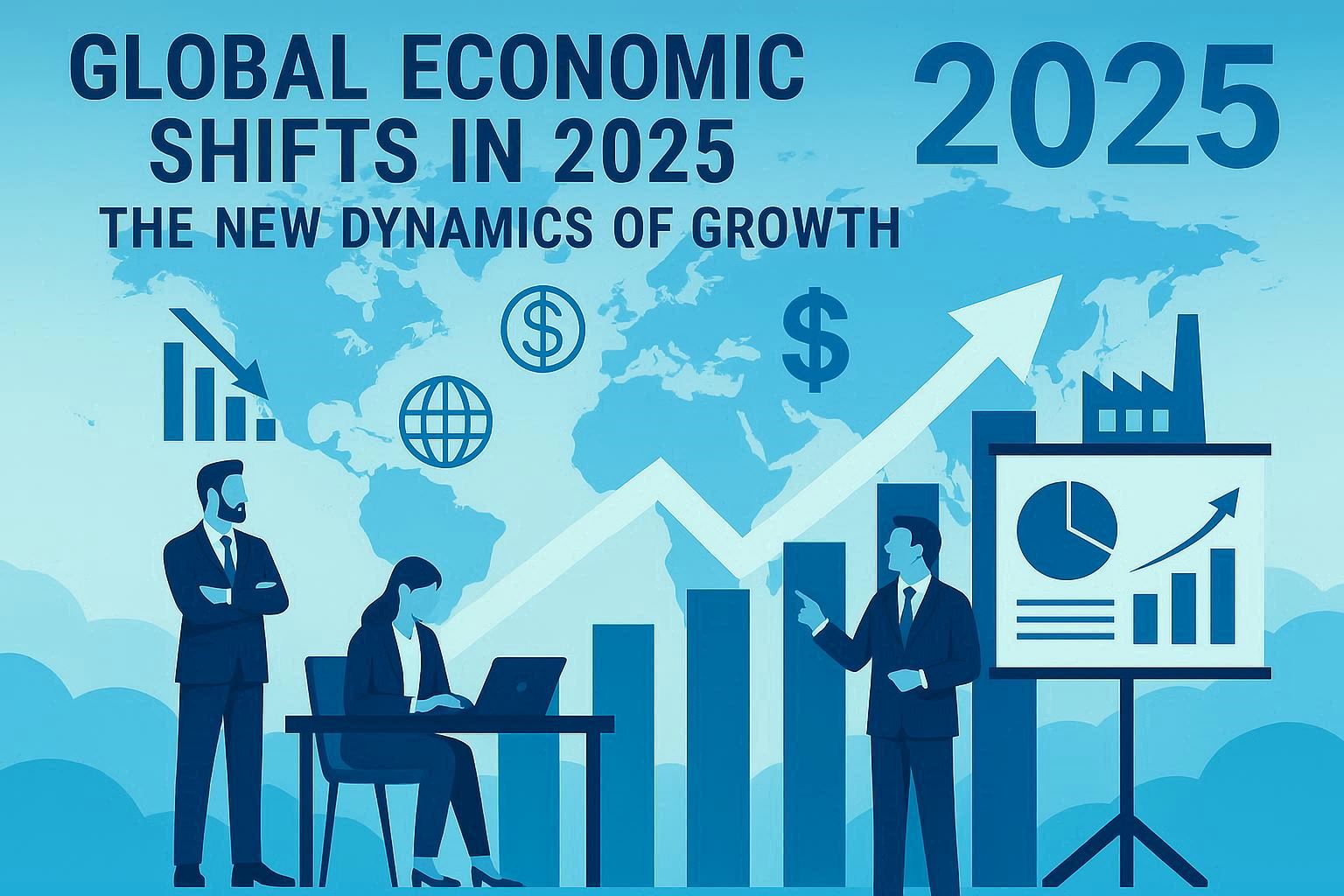
The global economy in 2025 is undergoing profound transformation. Driven by digital innovation, sustainability efforts, and evolving trade relations, the foundations of growth are shifting. Governments, corporations, and individuals alike are adapting to an economic environment that values resilience, inclusivity, and technological progress as much as profitability.
This article examines the major forces shaping the global economy in 2025, their implications for growth, and how nations and businesses are positioning themselves for a more dynamic and sustainable future.
1. A World Rebalancing: From Globalization to Regional Cooperation
After decades of hyper-globalization, 2025 marks a new era of regional partnerships. Supply chain disruptions and geopolitical tensions have encouraged countries to strengthen local production networks and diversify trade relationships. This “smart regionalism” reduces dependency on single markets and promotes stability in global commerce.
Trade blocs in Asia, Africa, and Latin America are rising in influence, emphasizing regional manufacturing, digital trade agreements, and energy cooperation. The global economy is becoming more decentralized yet interconnected through technology.
2. Digital Transformation and the New Economic Infrastructure
Digital technology has become the backbone of modern economies. From fintech to blockchain-based supply chains, digital infrastructure is driving new efficiencies and transparency. Governments are investing heavily in digital identity systems, e-governance, and online tax platforms to modernize economic management.
Digital currencies and decentralized finance (DeFi) are reshaping monetary systems, while data analytics and AI support smarter policymaking. Nations that adapt quickly to these digital changes are seeing stronger productivity and innovation-led growth.
3. Inflation, Interest Rates, and the Fight for Stability
Economic policymakers in 2025 face a delicate balance between curbing inflation and supporting growth. After years of fluctuating prices due to supply chain shocks and energy transitions, many central banks have shifted to moderate interest rate policies.
Stable inflation remains a priority. Countries that successfully maintain price control and encourage responsible fiscal policies are regaining investor confidence and attracting foreign capital. Meanwhile, those struggling with high debt or weak currencies continue to face volatility.
4. The Energy Transition and Its Economic Impact
The transition to renewable energy is one of the most significant economic shifts of the decade. Investments in solar, wind, and hydrogen are generating millions of jobs and reducing dependence on fossil fuels. Although the short-term costs of transition remain high, the long-term benefits include greater energy independence and sustainable growth.
Countries leading in green technology are positioning themselves as the new economic superpowers of the energy era. From Europe’s Green Deal to Asia’s clean-tech initiatives, sustainable energy is now central to national competitiveness.
5. Labor Markets in Evolution
The nature of work is transforming. Automation, AI, and remote work are redefining employment structures worldwide. In 2025, hybrid work models dominate, allowing flexibility and global collaboration. However, the shift also demands reskilling as traditional roles disappear and digital skills become essential for employability.
Governments are promoting lifelong learning programs, while private companies invest in employee training to close skill gaps. Labor flexibility is becoming a cornerstone of economic resilience.
6. The Role of Emerging Markets
Emerging economies continue to drive global growth. Countries in Africa, Southeast Asia, and Latin America are leveraging technology and demographic advantages to attract investment. With improved infrastructure and expanding middle classes, these markets are becoming key players in manufacturing, services, and digital finance.
International investors see these regions as the next frontier for sustainable and inclusive economic expansion, contributing to a more balanced global growth structure.
7. Sustainability as a Core Growth Strategy
Economic growth in 2025 is no longer measured solely by GDP. Environmental and social metrics—such as carbon reduction, resource efficiency, and equitable development—are now part of national success indicators. Green finance, circular economies, and ESG (Environmental, Social, Governance) principles dominate investment priorities.
Businesses that integrate sustainability into their operations are achieving long-term stability and brand trust, while those ignoring it face regulatory and reputational risks.
8. Innovation and Entrepreneurship as Growth Engines
Innovation remains the driving force of economic renewal. Startups and small enterprises are spearheading breakthroughs in biotechnology, AI, fintech, and renewable energy. Governments are supporting entrepreneurship with tax incentives, simplified regulations, and startup hubs to encourage job creation and competitiveness.
The synergy between technology, education, and entrepreneurship is fostering an ecosystem where creative ideas rapidly translate into economic value.
9. Global Trade and Supply Chain Realignment
In 2025, global supply chains are becoming more diversified and technologically driven. Companies are investing in automation, predictive analytics, and local sourcing to enhance resilience. Blockchain ensures transparency in logistics, while AI optimizes routes and inventory management.
This reconfiguration creates a more stable trade environment and minimizes the risks associated with geopolitical shocks and natural disasters, strengthening long-term global commerce.
10. The Outlook for 2025 and Beyond
The world economy in 2025 stands at a crossroads between uncertainty and opportunity. Technological progress, demographic shifts, and environmental urgency are redefining the path toward prosperity. Economies that embrace innovation, sustainability, and inclusion will emerge stronger and more adaptable in the coming decade.
While challenges such as inflation, inequality, and debt persist, collaboration among nations and responsible governance can ensure that global growth becomes more balanced, fair, and future-ready.
Conclusion
Economic transformation in 2025 is about more than numbers—it’s about redefining progress. The shift toward digitalization, green energy, and human-centered policies marks the dawn of a new economic era. Nations that harness technology, invest in people, and prioritize sustainability will not only recover from past disruptions but also lead the world toward a more resilient and equitable global economy.