
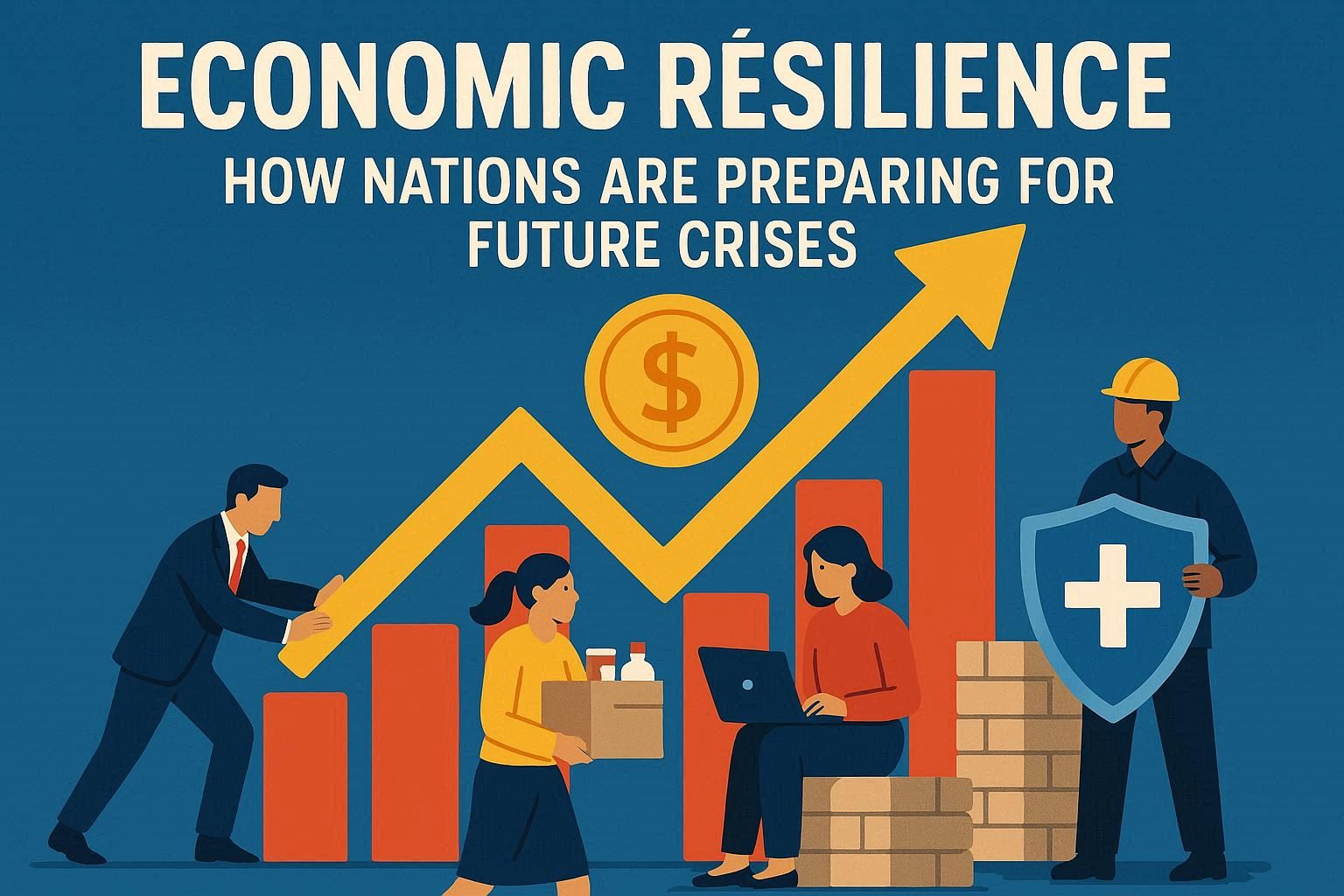
In an increasingly unpredictable world, economic resilience has become the cornerstone of national stability. From pandemics to geopolitical tensions and climate shocks, countries have learned that economic strength is not only about growth—it’s about the ability to withstand and recover from crises. In 2025, building resilience is no longer optional; it’s a strategic necessity for governments, businesses, and individuals.
This article explores how nations around the world are preparing for future economic disruptions, the policies driving resilience, and the role of innovation, sustainability, and cooperation in securing a stable future.
1. Understanding Economic Resilience
Economic resilience refers to the capacity of an economy to absorb shocks, adapt to changing conditions, and recover quickly from disruptions. It involves maintaining essential functions—such as production, employment, and social welfare—while minimizing long-term damage to economic structures.
Resilient economies are proactive rather than reactive. They anticipate risks, invest in preparedness, and balance short-term responses with long-term growth strategies.
2. Lessons from Recent Crises
The COVID-19 pandemic, energy crises, and global inflation of the early 2020s exposed vulnerabilities in global supply chains, healthcare systems, and financial markets. These events taught policymakers valuable lessons: diversification, technological agility, and social safety nets are key to surviving shocks.
Countries that invested early in digital infrastructure and healthcare preparedness recovered faster than those that relied heavily on single export industries or fragile supply chains.
3. Diversification as a Shield
Economic diversification is one of the strongest defenses against crisis. Nations dependent on a single industry—such as oil, tourism, or manufacturing—are highly exposed to global volatility. In 2025, many governments are broadening their economic base by investing in technology, renewable energy, and knowledge-based sectors.
For example, Gulf countries are investing in green energy and logistics, while African and Asian nations are promoting digital entrepreneurship to reduce dependence on raw materials.
4. Strengthening Supply Chain Security
The global supply chain disruptions of recent years highlighted the need for local and regional production capacity. Nations are now adopting “resilient supply chain” strategies that balance efficiency with security. This includes reshoring key industries, building strategic reserves, and enhancing logistics through automation and digital monitoring.
Blockchain and AI technologies play an essential role in ensuring transparency, predicting disruptions, and improving inventory management.
5. Digital Transformation and Economic Agility
Digital infrastructure is a central pillar of economic resilience. Cloud computing, e-commerce, digital payments, and artificial intelligence have allowed economies to remain active during global disruptions. Governments are encouraging digital adoption across all sectors, from education to agriculture.
Digital tools enhance government responsiveness, enabling faster decision-making, real-time data analysis, and improved resource allocation during crises.
6. Fiscal and Monetary Preparedness
Resilient nations maintain sound fiscal policies, reduce debt dependence, and build emergency funds. Central banks are creating flexible monetary frameworks capable of responding to inflation spikes and liquidity shortages.
Some governments have established sovereign wealth funds or stabilization funds to buffer against economic downturns, ensuring financial continuity during crises.
7. Investing in Human Capital
A strong economy depends on educated, healthy, and adaptable people. In 2025, countries are prioritizing education, healthcare, and lifelong learning as resilience tools. Digital literacy, vocational training, and public health systems ensure that citizens can adapt to new industries and technologies.
Social protection systems—such as unemployment benefits, health coverage, and pension schemes—are being expanded to protect vulnerable populations during times of uncertainty.
8. Sustainable Development as a Foundation
Climate change is a long-term economic threat. Building resilience requires integrating environmental sustainability into every aspect of policy. Renewable energy investment, sustainable agriculture, and green finance are becoming national priorities. These initiatives not only reduce environmental risks but also create jobs and attract global investment.
Countries that align economic growth with sustainability are better positioned to avoid future crises caused by resource scarcity or environmental damage.
9. Global Cooperation and Shared Resilience
No nation can build resilience in isolation. Global challenges—such as pandemics and financial instability—require collective action. International cooperation through organizations like the IMF, World Bank, and G20 has evolved toward building shared frameworks for crisis response and recovery.
Cross-border investments in energy, technology, and trade infrastructure strengthen global stability and ensure that developing economies are not left behind.
10. The Future of Resilient Economies
In the decade ahead, resilience will define global competitiveness. Economies that are flexible, diversified, and digitally integrated will lead global growth. Governments must continue to innovate, encourage private-sector participation, and promote inclusive policies that distribute the benefits of resilience across all segments of society.
The future belongs to nations that can anticipate change, act decisively, and recover quickly from the unexpected.
Conclusion
Economic resilience is not built overnight—it is developed through strategic foresight, innovation, and collaboration. In 2025, the most successful nations are those that combine digital transformation, diversification, and sustainability with strong governance and social inclusion.
As the world continues to face new challenges, from climate risks to technological disruption, resilience will remain the true measure of economic strength. Preparing today is the key to thriving tomorrow.