
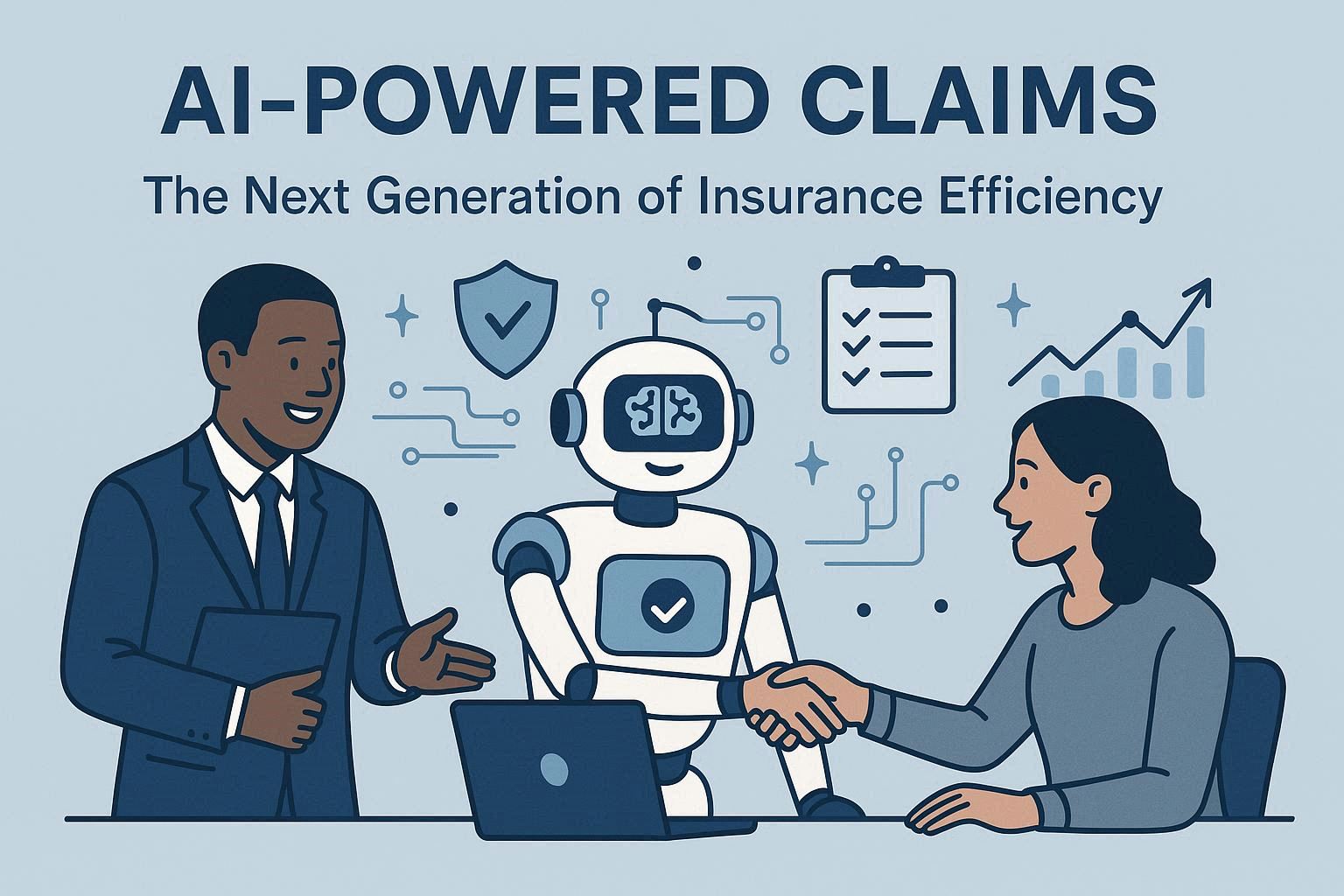
In 2025, the insurance industry is witnessing one of its biggest revolutions yet — the rise of artificial intelligence in claims management. The traditional claims process, often criticized for being slow, complex, and prone to human error, is being transformed into a fast, data-driven, and transparent system powered by AI. From fraud detection to instant settlements, AI is redefining what efficiency means for insurers and customers alike.
1. The Shift Toward Intelligent Automation
Automation has already improved administrative efficiency across industries, but AI takes it a step further by making processes smarter. In insurance, AI-driven automation allows claims to be analyzed, verified, and approved in real time. Instead of relying on manual review, systems can assess thousands of data points within seconds, dramatically reducing processing time and human involvement.
2. Faster Claims Processing and Settlement
Customers today expect speed and simplicity. AI systems analyze digital documents, photos, and sensor data from connected devices to validate claims almost instantly. This means that what once took weeks — from filling forms to receiving payment — can now happen within minutes. Insurers using AI-powered systems have reported up to 70% faster settlements and significantly improved client satisfaction rates.
3. Enhanced Fraud Detection and Risk Management
Fraud has long been a major challenge in the insurance sector, costing billions of dollars each year. AI uses advanced pattern recognition and anomaly detection algorithms to flag suspicious claims automatically. By analyzing historical data, social connections, and behavioral trends, AI systems can detect inconsistencies that would be nearly impossible for humans to identify. This proactive approach helps insurers minimize losses and maintain fair pricing for honest policyholders.
4. Smarter Data Integration
AI-powered platforms integrate information from multiple sources — such as telematics, IoT devices, medical reports, and policy records — into one unified system. This provides insurers with a holistic view of each claim, enabling faster and more accurate decision-making. For example, in auto insurance, AI can analyze crash sensor data to automatically estimate damage costs and determine liability without human intervention.
5. Improved Customer Experience
Artificial intelligence enhances customer experience by providing seamless, transparent, and personalized service. Chatbots and virtual assistants now guide users through the claims process 24/7, answering questions and providing updates in real time. Customers no longer need to wait on hold or fill out lengthy forms — AI tools handle most tasks, while human agents focus on complex or emotional cases requiring empathy.
6. Predictive Analytics for Claims Management
Beyond handling claims, AI also predicts them. Predictive analytics help insurers anticipate potential claims based on customer behavior and risk profiles. For example, health insurers can use wearable data to predict medical incidents, while auto insurers can anticipate accident risks using driving data. This proactive approach helps companies prepare resources, improve customer support, and even prevent claims before they occur.
7. Cost Reduction and Operational Efficiency
AI drastically cuts down operational costs by eliminating repetitive manual tasks, reducing paperwork, and minimizing human errors. Automated verification and fraud detection reduce financial losses, while digital claims processing minimizes administrative overhead. Insurers can reallocate resources to strategic growth areas such as innovation, marketing, and customer engagement.
8. Regulatory Compliance and Data Security
One of the biggest challenges of automation is ensuring regulatory compliance. AI helps insurers stay compliant by monitoring transactions and flagging any irregularities that violate policy or legal frameworks. At the same time, AI-driven cybersecurity tools protect sensitive data from breaches through intelligent encryption and threat detection systems. This dual function builds trust with regulators and clients alike.
9. Integration of AI with Blockchain Technology
The future of claims management lies at the intersection of AI and blockchain. While AI ensures efficiency and automation, blockchain provides transparency and trust. Together, they create a system where claims are processed automatically and recorded immutably on a secure ledger. This eliminates fraud, reduces disputes, and allows both customers and insurers to verify every step of the process.
10. The Human-AI Collaboration
Despite automation, human judgment remains crucial. AI is best used as a support tool, not a replacement. Claims adjusters now act as supervisors, reviewing complex cases or ethical dilemmas that machines can’t fully understand. This collaboration ensures balance — blending machine precision with human empathy to deliver the best outcomes for customers.
Conclusion
AI-powered claims management represents a major leap forward for the insurance industry. It offers speed, transparency, and cost efficiency while improving customer satisfaction and reducing fraud. As technology advances, the goal is not to remove humans from the process, but to empower them with smarter tools that make decisions faster and more accurate.
In the coming years, insurers who embrace AI will not only process claims more efficiently but will also redefine how trust, fairness, and customer experience are built in the digital age. The next generation of insurance will be intelligent, automated, and human-centered — where every claim is resolved with speed, accuracy, and confidence.