
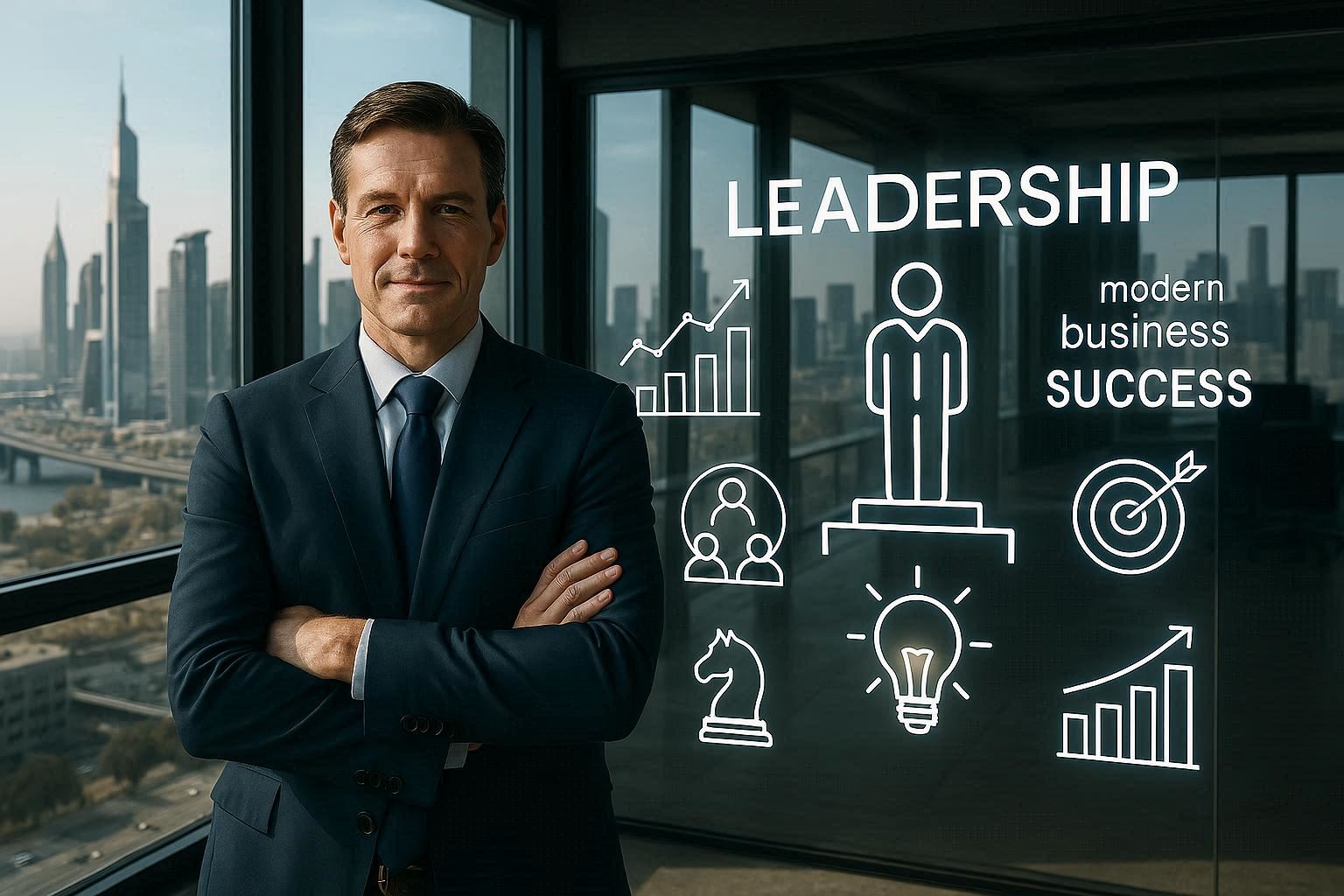
Leadership has always been a cornerstone of business success, but in 2025, its importance has reached new heights. The global economy is evolving rapidly — shaped by digital transformation, hybrid work models, and growing demands for ethical governance. In this context, effective leadership is not just about managing teams; it’s about inspiring innovation, building trust, and creating sustainable growth in an unpredictable world.
This article explores the evolving role of leadership in modern business, the qualities that define successful leaders in 2025, and the strategies organizations can use to cultivate leadership excellence at every level.
1. The Evolution of Leadership
Traditional leadership models focused on hierarchy, authority, and control. Today’s leaders, however, operate in a vastly different environment. Globalization, technology, and cultural diversity require flexibility, empathy, and collaboration. The modern leader must be both visionary and adaptable — capable of guiding teams through constant change while keeping people motivated and aligned with a shared purpose.
In 2025, leadership is less about command and more about connection. It’s about empowering individuals to take ownership, fostering creativity, and building resilient organizations capable of thriving in uncertainty.
2. Key Traits of Modern Leaders
Successful leaders in 2025 share several defining characteristics that enable them to guide their teams effectively through disruption and change. These include emotional intelligence, adaptability, integrity, communication, and strategic thinking.
Emotional intelligence allows leaders to understand and manage emotions — both their own and those of others — to foster collaboration and trust. Adaptability ensures they remain effective in fast-changing environments. Integrity builds credibility and strengthens team loyalty. Strategic vision helps align short-term actions with long-term goals, while clear communication ensures everyone understands the mission and their role in achieving it.
3. Leadership and Innovation
Innovation and leadership go hand in hand. A company’s ability to innovate depends largely on the environment created by its leaders. Forward-thinking leaders encourage experimentation, reward creativity, and accept failure as part of the learning process. In 2025, the best leaders act as facilitators of innovation — providing teams with the tools, autonomy, and psychological safety they need to take risks and generate new ideas.
Moreover, leaders must champion digital transformation. They must understand emerging technologies such as AI, blockchain, and data analytics, not necessarily as experts, but as enablers — ensuring these technologies are used strategically to improve efficiency, enhance customer experience, and drive growth.
4. Leadership in the Hybrid Work Era
The post-pandemic world has cemented hybrid work as a permanent model for many organizations. Leading hybrid teams requires a new skill set — balancing flexibility with accountability, and maintaining team cohesion despite physical distance. Leaders must foster inclusivity, communicate clearly across digital platforms, and ensure that remote employees feel valued and engaged.
In 2025, technology is a critical enabler of modern leadership. Digital collaboration tools, AI-driven analytics, and performance management platforms help leaders make informed decisions and maintain productivity across distributed teams.
5. Ethical and Inclusive Leadership
Modern businesses face increasing scrutiny from consumers, investors, and regulators. Ethical leadership — built on transparency, fairness, and responsibility — is now a key driver of brand reputation and long-term success. Employees are more likely to remain loyal to leaders who prioritize integrity and inclusivity.
Inclusive leadership goes beyond diversity hiring; it focuses on creating environments where all individuals can contribute meaningfully. Leaders who embrace inclusivity foster innovation, improve decision-making, and strengthen company culture. In 2025, inclusion and ethics are not side objectives — they are core business imperatives.
6. The Role of Emotional Intelligence
Emotional intelligence (EI) has emerged as one of the most essential traits for effective leadership. Leaders with high EI can manage stress, resolve conflicts, and motivate employees more effectively. They understand the emotional climate of their organizations and can adjust their leadership style accordingly.
In 2025, EI is increasingly supported by data and AI tools that help leaders measure engagement, detect burnout, and improve well-being. The human element of leadership — empathy and connection — remains irreplaceable, even in the most digital workplaces.
7. Leadership Development and Lifelong Learning
The pace of change in business means that leadership skills must constantly evolve. Organizations in 2025 invest heavily in leadership development programs that combine technology with experiential learning. Online courses, coaching, and AI-driven feedback systems allow continuous improvement and personalized growth.
Modern leaders are lifelong learners. They stay informed about emerging trends, technological advances, and evolving workforce expectations. This commitment to learning helps them remain relevant, effective, and innovative in their decision-making.
8. Leadership and Organizational Culture
Leaders play a crucial role in shaping and maintaining organizational culture. A positive, values-driven culture enhances engagement, productivity, and innovation. In contrast, poor leadership can create toxicity, disengagement, and high turnover.
In 2025, culture is recognized as a strategic asset. Leaders who model core values — such as collaboration, integrity, and respect — inspire their teams to do the same. Strong culture starts from the top and cascades throughout the organization, influencing every decision and behavior.
9. The Global Dimension of Leadership
Businesses are increasingly global, requiring leaders to manage multicultural teams and operate across diverse markets. Global leadership demands cultural intelligence — the ability to adapt to different customs, communication styles, and business practices. In 2025, effective leaders think globally but act locally, ensuring strategies resonate across regions while maintaining a unified vision.
Leaders who embrace diversity of thought and background gain access to broader perspectives, better problem-solving, and more innovative outcomes. Globalization rewards leaders who can bridge differences and unite teams under a common purpose.
10. Future Leadership: Human-Centered and Tech-Enabled
The future of leadership lies at the intersection of humanity and technology. While artificial intelligence and automation handle repetitive processes, leaders must focus on what machines cannot replicate — empathy, creativity, and moral judgment. The best leaders will use technology not as a replacement for people but as a tool to empower them.
By 2030, leadership success will be defined by how well organizations balance innovation with human connection. The leaders who thrive will be those who combine data-driven insights with emotional intelligence, using technology to build stronger, more resilient human organizations.
Conclusion
Leadership in 2025 is about far more than managing performance — it’s about guiding transformation. In a world shaped by rapid technological change and social evolution, leaders must be visionary, ethical, and emotionally intelligent. They must inspire innovation while maintaining human connection, foster inclusivity while driving performance, and navigate complexity with integrity and purpose.
The most successful businesses of the future will be led by those who understand that leadership is not a title but a responsibility — to people, to progress, and to the planet. By embracing these principles, today’s leaders can build organizations that thrive not only in profit but in purpose and impact.